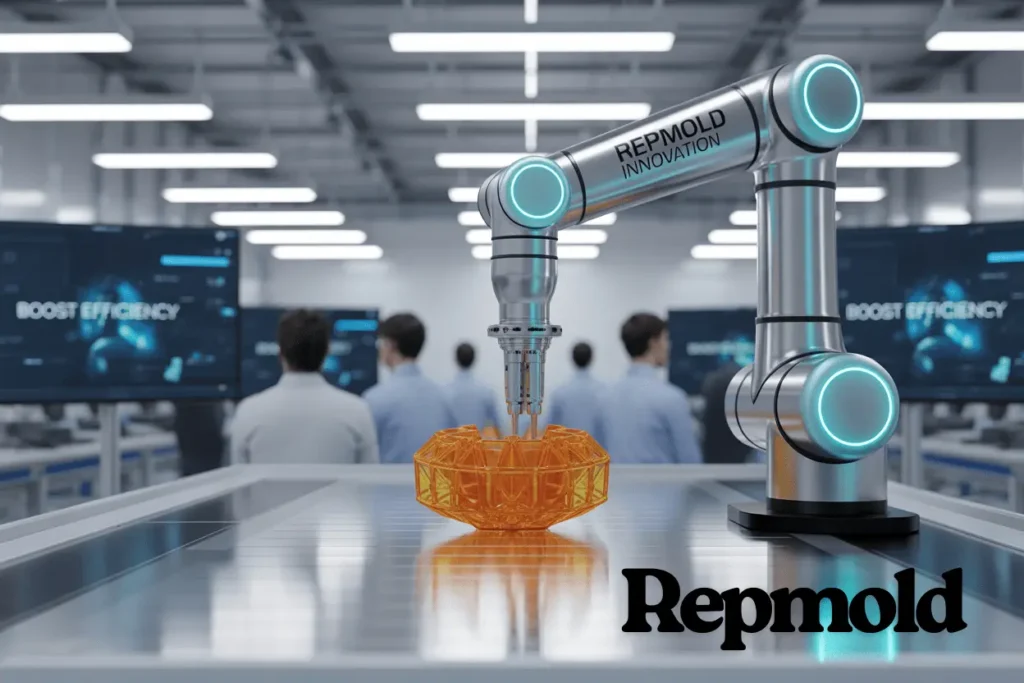

Introduction to Repmold
When people first come across the term repmold, they usually assume it’s some kind of technical jargon, and in a way, they’re absolutely right. The word itself sounds like something you’d hear in a manufacturing plant, a workshop, or a product design studio. And honestly, that’s exactly where it belongs. Repmold is connected to the world of molding, replication, and high-precision production processes. Even though it’s a niche term, it has become increasingly important in industries that require accuracy, durability, and perfect consistency in product creation.
Understanding repmold begins with understanding the purpose behind mold-based systems in general. Molding has been around for centuries, but modern repmold techniques take the concept to an entirely new level. Today, engineers, designers, and manufacturers rely heavily on this method to produce parts more efficiently. It bridges the gap between prototype and final production. The idea is to replicate the exact shape, build, and performance of a component over and over again without having to manually recreate it.
Another thing worth noting is that repmold isn’t just about making objects. It’s about creating a repeatable system that improves quality, reduces time investments, and lowers production costs. This article will walk you through everything you need to know—from how repmolding works to where it’s used and why it’s becoming such a valuable asset in product development.
What Exactly Is Repmold?
To understand repmold, think of it as a precise replication mold or a repeat-mold system designed to create identical components consistently. Unlike traditional molding techniques that often require extensive tweaking, repmold focuses on producing exact duplicates with minimal error margins. This makes it ideal for industries that cannot afford inaccuracies, such as aerospace, automotive, medical devices, and high-end electronics.
One defining feature of the repmold approach is its focus on repeatability. You’re not just creating a mold; you’re creating a system. The system ensures that every product pulled from the mold matches the original specifications perfectly. Whether the final output is a plastic component, a metal part, or a hybrid material, the goal remains the same: consistency and performance.
In recent years, repmold technology has advanced thanks to 3D modeling, automation, and more sophisticated materials. These developments make it easier to produce molds that last longer and require fewer adjustments. Many engineers now rely on digital prototyping combined with repmold techniques to streamline production timelines. What used to take weeks can now be done in days, sometimes even hours.
How Repmold Works
The process behind repmold is fairly straightforward but highly technical. It begins with designing a master model. This master model acts as the ideal version of the final product. The design stage is crucial because any flaw in the master model will be replicated in every piece produced. That’s why engineers spend a significant amount of time refining, testing, and validating the digital and physical design.
Once the master model is perfected, the mold creation phase begins. This is where materials like silicone, metal alloys, or high-strength polymers are used depending on the product’s requirements. In repmold systems, the accuracy of these materials is incredibly important. The mold needs to pick up even the smallest details to guarantee consistency in every final product. After the mold hardens or sets, a series of test runs are conducted to check for any production flaws.
Finally, the replication process starts. The mold is filled with the appropriate material—plastic resin, metal, or composite material—and manufacturers can begin mass-producing identical components. Throughout the production phase, quality control teams run detailed inspections to ensure the consistency of each piece. Repmold processes often integrate sensors and monitoring systems to detect even the slightest deviations. As a result, manufacturers get parts that are nearly flawless and much cheaper to produce on a large scale.

Advantages of Repmold
One of the biggest reasons repmold has gained popularity is the cost efficiency it brings. Traditional manufacturing methods can require constant adjustments, expensive tooling, and manual interventions. But repmold eliminates much of that extra work. Once the mold is created, manufacturers can keep producing identical parts with minimal effort. This drastically reduces labor costs and material waste.
Another major advantage is the improvement in production speed. Businesses that once struggled with long development cycles now rely on repmold to complete projects faster. This helps companies respond to market demands quickly, launch new products sooner, and beat competitors in terms of innovation and efficiency. When time is money—as it always is in manufacturing—repmold proves itself invaluable.
The consistency of repmold should not be underestimated either. Industries like medicine and aerospace cannot tolerate even the slightest inconsistencies. A minor variation in a medical component, for example, could compromise a device’s safety. Repmold ensures that every product meets strict standards. It also enhances customer satisfaction because clients can depend on the manufacturer to deliver the same quality every single time.
Applications of Repmold
Repmold applications stretch across multiple industries. In automotive manufacturing, repmold helps produce essential parts like engine components, interior fittings, and connectors. Because vehicles require precision to operate safely, repmold has become a trusted method for ensuring reliability. Many luxury car brands now integrate repmold systems to maintain high quality while speeding up production.
In the medical field, repmold is used to create components for devices such as implants, surgical tools, and diagnostic equipment. Since safety and accuracy are critical, repmold’s reliability makes it a preferred solution. Even small items like syringes or valve parts often depend on repmold processes to guarantee uniformity and safe performance.
Consumer electronics also benefit greatly from repmold technology. From smartphone casings to internal circuitry components, manufacturers rely on molds to produce parts that fit perfectly. As devices become smaller and more complex, repmold offers a stable way to replicate intricate designs. The same applies to robotics, aerospace, packaging, and more. The versatility of repmold is one of the main reasons industries continually adopt it.
Future of Repmold Technology
Looking ahead, repmold technology is set to advance even further. We’re already seeing the integration of AI-driven sensors, automated quality control, and improved mold materials that last longer. These innovations allow companies to push boundaries in design and production. Manufacturers are also exploring eco-friendly molding materials to reduce environmental impact.
Another promising direction is combining repmold with 3D printing. This hybrid approach allows prototypes to be created instantly and molds to be produced faster than ever before. It’s becoming increasingly common for companies to 3D print master models or even 3D-print molds themselves. This transforms the production landscape by making repmold accessible to smaller businesses too.
As digital manufacturing evolves, repmold will remain an essential part of the process. The speed, accuracy, and cost-effectiveness it offers make it a top choice for forward-thinking industries. In the coming years, we can expect repmold to become even more advanced, widely used, and integrated into smart manufacturing systems.